
How Palermo Became Palermo: The Hidden History of Buenos Aires’ Most Famous Neighborhood

Today, Palermo can feel like the most contemporary part of Buenos Aires. Specialty coffee, cocktail bars, designer shops, restaurants, nightlife, parks and some of the city's most expensive apartments.
But look a little closer and almost everything here is sitting on top of another Palermo.
A prison became a park. A gunpowder depot became the Botanical Garden. A working-class neighborhood became Palermo Soho. An underground stream still shapes the streets above it. And one of Buenos Aires’ most popular parks was created on land that once belonged to 19th-century governor Juan Manuel de Rosas. Palermo's history is, above all, a history of reinvention.
It all started with a Sicilian
The name Palermo goes back almost to the beginning of Buenos Aires.
Shortly after Juan de Garay founded the city for the second time in 1580, a Sicilian immigrant named Juan Domínguez arrived in the area. Through marriage and later purchases, he acquired land along what was then a landscape of farms, wetlands and riverbanks.
The curious part? His surname wasn't Palermo.
Domínguez added "Palermo" to his name because he came from Palermo, Sicily. By the time he died in 1635, the name was already being used for a large part of this area.
So yes: Palermo, Buenos Aires is ultimately named after Palermo, Sicily.
There is a river underneath Juan B. Justo
Before buildings, cafés and avenues, Palermo was shaped by water.
The Maldonado was the most important of the streams that once crossed Buenos Aires. Its valley interrupted the natural barranca that can still be seen in places such as Parque Lezama, Recoleta and Barrancas de Belgrano.
The stream eventually disappeared from view, but not from the city.
Today, it runs underground beneath Avenida Juan B. Justo.
This helps explain why Juan B. Justo remains such a strong dividing line inside Palermo. Today it separates Palermo Soho from Palermo Hollywood, but the geography underneath is much older than either name.
Rosas builds his Palermo
In the 1830s, much of Palermo was still a difficult landscape of wetlands and low-lying land.
Juan Manuel de Rosas, the powerful governor who dominated Argentine politics for much of the mid-19th century, saw potential in the area.
He began buying properties, filling parts of the wetlands with soil and eventually accumulated hundreds of hectares. His great residence, Palermo de San Benito, stood around today's intersection of Avenida del Libertador and Avenida Sarmiento.
By the late 1840s, Rosas was living there permanently. Ministers, diplomats and political figures came to Palermo to meet him, making the estate an important center of political power.
Parts of the property were also opened to the public. There were gardens, trees and even a collection of animals that reportedly included ostriches, foxes, vizcachas and a bear.
Palermo was slowly becoming somewhere porteños went for recreation.
Then came 1852.
From Rosas to Sarmiento
On February 3, 1852, Rosas was defeated by Justo José de Urquiza at the Battle of Caseros, which brought Rosas’ long rule to an end.
His Palermo properties were confiscated.
Years later, Domingo Faustino Sarmiento, a future Argentine president and one of Rosas’ most prominent political opponents, promoted the creation of a great public park on the former Rosas lands, inspired by the urban parks he had seen abroad, particularly New York’s Central Park.
Its name?
Parque Tres de Febrero — February 3rd Park.
The date of Rosas' defeat.
The park opened in 1875 and became the origin of today's Bosques de Palermo.
But the symbolism didn't stop there.
Rosas' old residence survived until 1899, when it was demolished with explosives.
The date chosen for the demolition?
February 3rd.
And in 1900, a monument to Sarmiento by Auguste Rodin was inaugurated close to where Rosas' house had stood.
Subtle, they were not.
Palermo becomes Buenos Aires' laboratory
During the late 19th and early 20th centuries, Palermo became one of the places where Buenos Aires experimented with modern urban life.
The Botanical Garden, Zoo, La Rural and Hipódromo developed around the great park. New forms of transportation connected Palermo with the center.
Sports also found an early home here. Argentina's first documented football match was played in 1867 on grounds close to where the Planetarium stands today. Cricket, rugby, athletics, tennis, golf, polo and horse racing all became part of Palermo's landscape.
Even aviation entered the story. Pioneers such as Jorge Newbery and Aarón de Anchorena experimented with ballooning in the area. Buenos Aires' city airport would eventually be named Aeroparque Jorge Newbery.
Palermo was not simply expanding. It was becoming a playground for the modern city.
And then there was tango
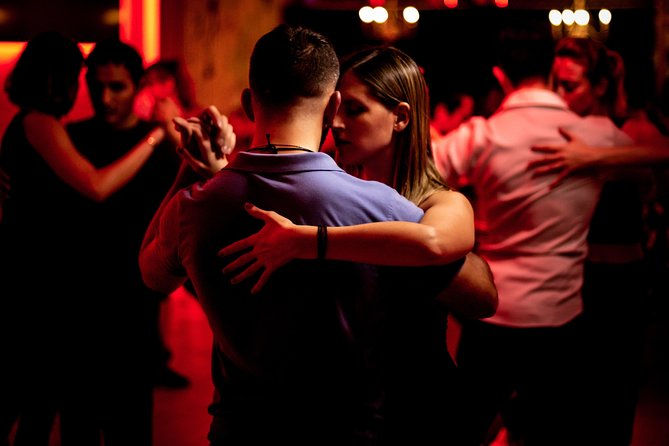
Palermo also occupies an important place in the mythology of early tango.
One legendary venue was Café Hansen, located in the Bosques de Palermo. During the day it attracted riders and cyclists; at night, members of Buenos Aires high society came for music and entertainment.
Historians still debate how much tango was actually danced there. Some claim it was played but not danced; others place Hansen among tango's earliest dancing venues.
The uncertainty is almost appropriate. Early tango history is full of stories where fact and mythology have become difficult to separate.
Nearby, the elegant Armenonville cabaret would later become another important nightlife venue. In 1914, Carlos Gardel and José Razzano made their debut there as a duo.
Palermo could be aristocratic and marginal, elegant and arrabalero, often at the same time.
A prison becomes Parque Las Heras
One of Palermo's most surprising transformations can be found at Parque Las Heras.
From 1877 until the early 1960s, this was the site of the Penitenciaría Nacional, one of Argentina's most important prisons.
The prison witnessed some famous executions, including those of anarchist Severino Di Giovanni and General Juan José Valle, in very different periods of Argentine history.
North of the prison was an area considered so rough that porteños nicknamed it Tierra del Fuego, partly because of its association with the famous prison in Ushuaia.
Today?
It is one of the most expensive residential areas of Buenos Aires.
The penitentiary was demolished in 1962 and the land eventually became Parque Las Heras.
People now sunbathe, exercise and walk their dogs where prison walls once stood.
Palermo Viejo: before Soho was Soho
The story of Palermo Soho begins long before brunch and specialty coffee.
In 1885, a development called Villa Alvear was planned south of Avenida Santa Fe as a "city for workers." Its center developed around Serrano and Honduras, where today's Plaza Serrano —officially Plazoleta Julio Cortázar— is located.
The area later became known as Palermo Viejo, partly because it preserved many traditional casas chorizo.
These narrow houses were built on the classic Buenos Aires lot of 8.66 meters wide, with rooms arranged one after another along a patio.
Many survived.
And that is one reason Palermo Soho looks the way it does today.
Instead of completely demolishing the old neighborhood, restaurants, boutiques and design stores frequently moved into its existing houses. A family patio became a restaurant courtyard. A front room became a showroom.
The old city became the architecture of the new one.
Borges' Palermo
Palermo Viejo was also the childhood territory of legendary writer Jorge Luis Borges.
Borges lived on Calle Serrano, a section of which now carries his name. Palermo later became an essential part of his literary imagination: patios, street corners, compadritos, knives, tango and the edges of the growing city.
In his poem Fundación mítica de Buenos Aires, Borges even imagines Buenos Aires being founded not around Plaza de Mayo, but in a block of his own Palermo.
It is not geography. It is mythology.
And perhaps no writer did more to transform Palermo into a mythical landscape.
Little Armenia
Another important layer of Palermo Viejo came with Armenian immigration.
Many Armenians fleeing persecution and the Armenian genocide settled in this part of Buenos Aires, establishing businesses, restaurants, churches and community institutions.
Their presence survives today in places such as Calle Armenia, the Armenian Cathedral and Plaza Inmigrantes de Armenia.
Even that plaza hides another Palermo underneath it: until 1979, a large gas holder stood on the site.
A gas facility became one of Palermo Soho's most pleasant public squares.
Again: reinvention.
Soho, Hollywood, Nuevo…
During the late 20th century, Palermo reinvented itself once more.
Palermo Viejo increasingly became associated with design, fashion, gastronomy and nightlife, eventually acquiring the name Palermo Soho.
Across Juan B. Justo, television studios and audiovisual production companies began clustering during the 1990s. That area became Palermo Hollywood.
Elsewhere, new high-rise developments created Palermo Nuevo, while nearby Las Cañitas transformed from an area historically associated with horse-racing stables into a major gastronomic and nightlife district.
Many of the "Palermos" that seem so established today are surprisingly recent.
Why Plaza Italia is still chaotic
There is also a reason Plaza Italia remains one of Buenos Aires' great transportation nodes.
Long before buses, trains or the Subte existed, this was already an important crossing point.
Old routes approaching the city converged around the valley of the Maldonado stream. Later came the entrance gates to Parque Tres de Febrero —the famous Portones de Palermo— followed by trams, railways, the Subte and buses.
Nearby, the name Pacífico comes from the old Buenos Aires al Pacífico railway. Its elevated tracks cross Avenida Santa Fe over the metallic Puente Pacífico, which remains one of the area's landmarks.
The transportation hub of modern Palermo is sitting on top of a much older geography of movement.
Palermo keeps changing
Perhaps the best way to understand Palermo is not to ask which version is the "real" one.
They all are.
The wetlands became Rosas' estate.
Rosas' estate became a public park.
A gunpowder depot became the Botanical Garden.
A sports ground became the Planetarium.
A penitentiary became Parque Las Heras.
A brewery became Alto Palermo.
A gas holder became Plaza Armenia.
Workers' houses became designer stores and restaurants.
Railway infrastructure became a shopping promenade.
And reclaimed riverfront became Aeroparque.
Palermo's identity is not that it has no identity.
Its identity is reinvention.
So next time you walk through Palermo Soho with a coffee, cross the Bosques de Palermo or wait for the Subte at Plaza Italia, look around carefully.
The Palermo you see is only the latest one.


Comments